Fitness, Golf & Recreation
AED Maintenance & Management for Health Clubs, Fitness Centers, Golf Courses & Recreation Facilities
Protecting the people who trust you with their health and well-being.
Every day, millions of Americans visit fitness centers, health clubs, golf courses, recreation facilities, and wellness centers to improve their health. Yet these environments can also be the setting for sudden cardiac arrest.
When cardiac arrest strikes, every second matters. An automated external defibrillator (AED) can help save a life—but only if it is accessible, operational, and ready to use.
AED Service America provides professional, on-site AED maintenance and management nationwide, helping organizations establish, maintain, and document effective AED programs.
From a single-location fitness center to a nationwide chain of health clubs, we help ensure that your AED program is built around the people who may need to use it.
Our Singularity of Focus Is What Sets Us Apart
AED maintenance and management is not one of the many things we do. It is what we do.
The Research
Why AED Readiness Is Especially Important
Research published in Resuscitation found that fitness centers and golf courses had among the highest exposure-adjusted rates of treatable cardiac arrest among the public locations studied (treatable arrests per 1,000 person-years of exposure):
5.1
Fitness centers
4.8
Golf courses
0.7
Office complexes
0.7
Hotels
In this study, fitness centers had approximately seven times the exposure-adjusted rate reported for office complexes and hotels. These results do not imply that a particular gym has seven times the annual probability of an arrest; attendance, population, and exposure vary.
Sudden cardiac arrest can happen to anyone, including seemingly healthy individuals.
It is not the same as a heart attack. For organizations dedicated to wellness, emergency preparedness is an important part of protecting members, guests, employees, and visitors.
AED Selection
Choosing the Right AED: Simplicity Matters When Seconds Count
The first responder in a health club, hotel gym, golf clubhouse, or recreation center may be a trainer, desk employee, maintenance worker, member, or guest. That person may have limited training and little confidence under the pressure of an emergency. AED Service America emphasizes ease of use, intuitive operation, reliability, and the assistance an AED gives a rescuer.
Why We Often Recommend Fully Automatic AEDs
Fully automatic AEDs analyze the heart rhythm and, if a shock is advised, deliver it automatically after appropriate warnings without requiring the rescuer to press a shock button. Semi-automatic AEDs analyze the rhythm and prompt the rescuer to press a shock button when indicated. Both are designed to advise defibrillation only when appropriate.
For public-access settings where an inexperienced person may respond first, a fully automatic model is often a strong choice because it removes one additional action. Final selection should still reflect the facility, intended users, environment, and emergency response plan.
Our Evaluation
What We Evaluate Before Recommending an AED
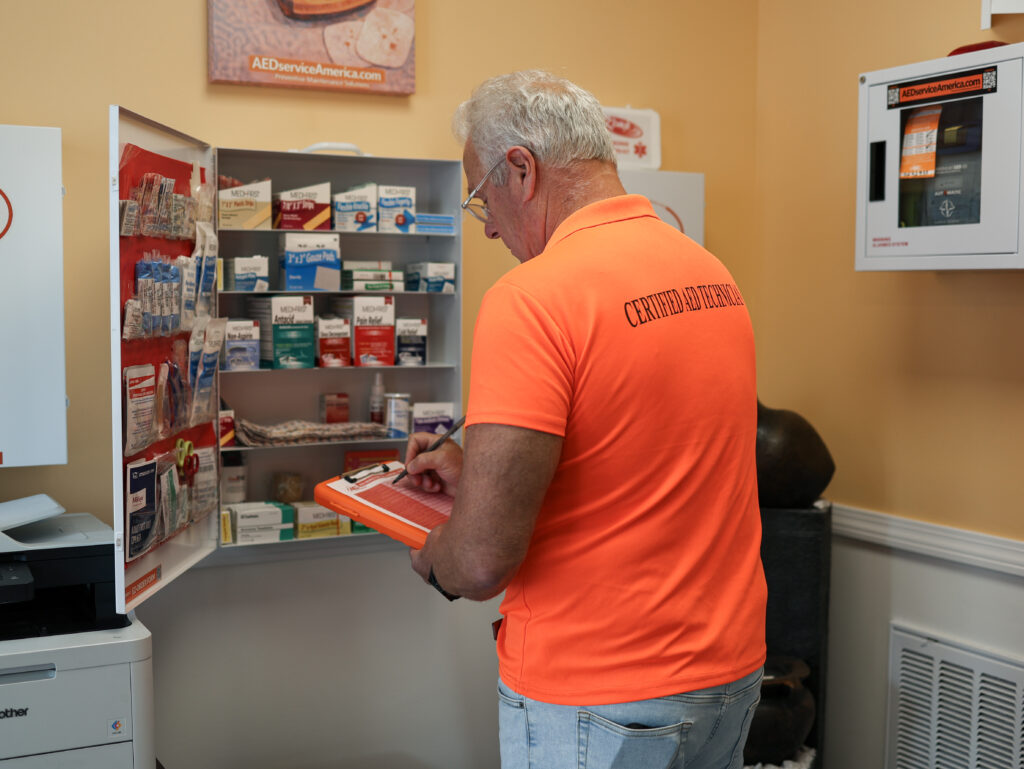
- Ease of use: clear voice and visual prompts, intuitive operation, and simple pad placement.
- Rescuer confidence: steps and guidance appropriate for lay responders.
- Device operation: fully automatic or semi-automatic design.
- CPR support: audio/visual coaching and feedback where available.
- Reliability: manufacturer support, self-tests, alerts, and maintenance history.
- Operating environment: heat, cold, humidity, dust, vibration, and water exposure.
- Lifecycle cost: electrode pads, batteries, expected service life, and availability.
- Regulatory fit: applicable FDA, manufacturer, state, and local requirements.
We work with major FDA-approved AED brands. The best AED is not necessarily the most costly or complex; it is an appropriate, dependable device that an intended rescuer can use correctly.
AED Placement
AED Placement: Rapid Access Matters
An AED in a locked office, behind a counter, or several buildings away may not be available quickly enough. AED Service America helps evaluate AED quantity and location based on facility layout, real travel routes, restricted access, operating hours, and anticipated response time.
Health Clubs and Fitness Centers
Placement considerations include cardio floors, group exercise and cycling studios, strength areas, pools and aquatic spaces, indoor tracks and courts, and reception or central access areas. Multiple floors and separate buildings may require additional units.
Golf Courses and Country Clubs
Clubhouses, pro shops, restaurants, driving ranges, practice areas, tennis and pickleball courts, pools, grounds facilities, remote holes, and response carts deserve consideration. An AED at the clubhouse alone may not cover a sprawling course promptly. Mobile units need manufacturer-appropriate protection against heat, cold, vibration, and other environmental stress.
Hotel Gyms and Corporate Wellness Facilities
An AED near hotel reception or office security may be too far from a gym on another floor or behind card-controlled doors. Elevator time, access control, unattended hours, and staffing all affect AED placement.
Recreation and Community Facilities
Pools, multiuse gyms, indoor courts, childcare areas, athletic fields, and detached buildings should be included in an integrated emergency response plan. We evaluate access and response rather than prescribing a fixed quantity of AEDs per facility.
Our philosophy: AED placement should reflect how quickly an AED can reach the victim, not simply how many devices are purchased.
In-Service Education
AED In-Service Education: Building Rescuer Confidence
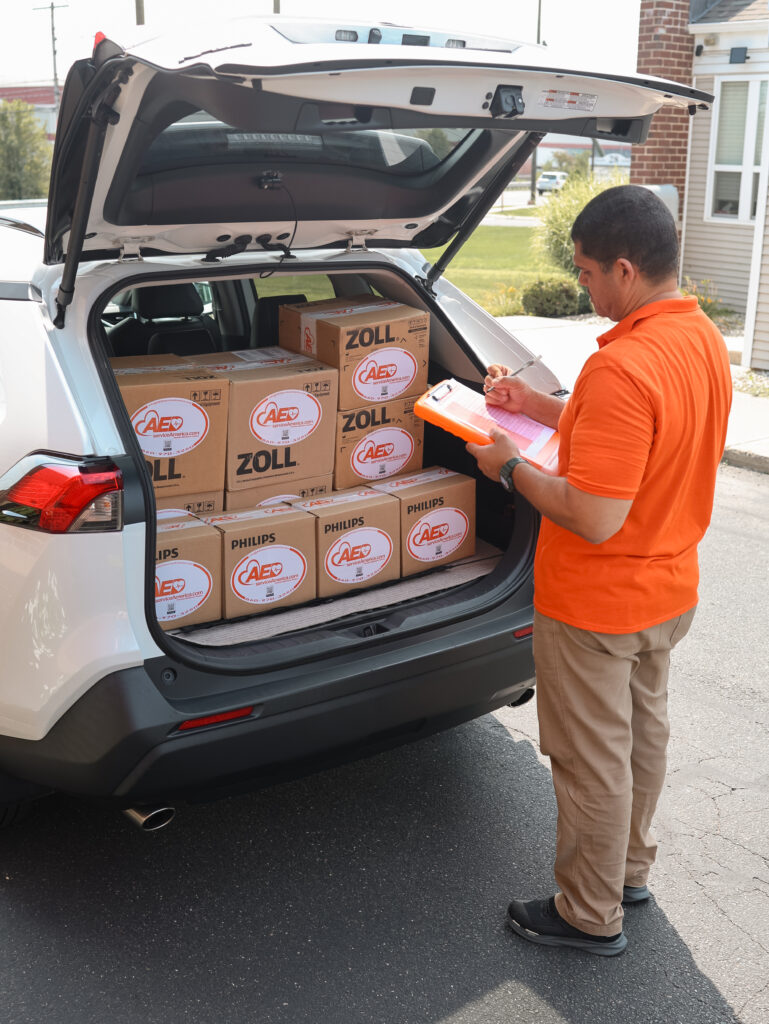
Even a straightforward AED can be intimidating during a life-threatening event. AED Service America can familiarize facility teams with the devices deployed at their locations, including:
- Where AEDs are located and how to access them.
- Recognizing suspected cardiac arrest and activating emergency services.
- Turning on the AED and following audio or visual instructions.
- Understanding fully automatic and semi-automatic configurations.
- Electrode pad placement and following AED prompts alongside CPR.
- Reporting an AED use, device alert, or other equipment concern.
Where formal CPR/AED certification is required or desired, appropriate training programs can be coordinated separately. Our objective is to help staff and potential lay responders feel more prepared to act.
Long-Term Readiness
AED Maintenance & Management: Long-Term Readiness
Purchasing an AED is a one-time step. Maintaining Response-Ready equipment is an ongoing responsibility. Batteries, electrode pads, self-test indicators, storage conditions, and supporting records all require attention. Self-testing and remote monitoring can be valuable, but they are not substitutes for appropriate physical inspection, preventive maintenance, documentation, and accountability.
What Our AED Management Programs Can Include
- Professional on-site inspections by trained technicians.
- Verification of device status, self-test indicators, pads, and batteries.
- Tracking of expiration dates, serial numbers, and applicable lot information.
- Checking AED accessibility, location, cabinets, signage, and rescue supplies.
- Manufacturer notices, product lifecycle, and replacement planning.
- Documented inspections and corrective actions.
- Applicable medical oversight and AED program records.
- Post-incident recovery, loaner coordination where applicable, and return-to-service support.
- Central access to AED program documentation.
Verified Documentation
Verified Documentation: Accountability Beyond a Checklist
Our Response-Ready Technicians create field summary reports and photographs that are transmitted to an account manager for review and approval before the technician proceeds to the next AED. This verification helps support consistent service, accurate records, and defensible maintenance documentation.
Multi-Location Operators
Nationwide AED Management for Multi-Location Operators
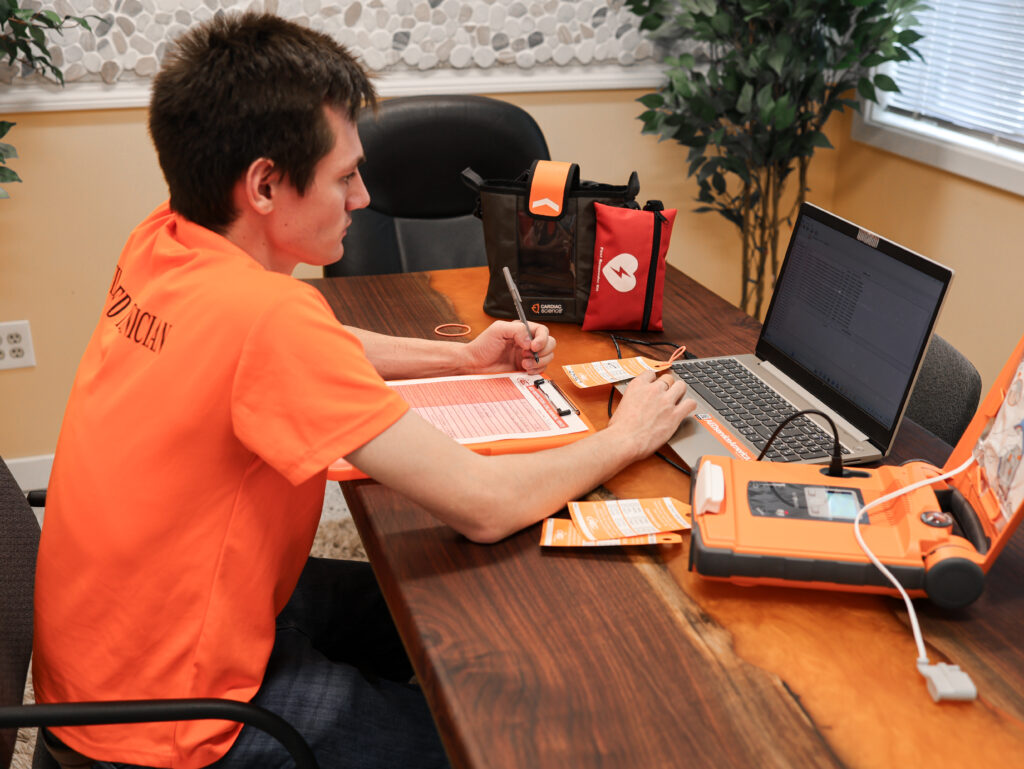
Managing AEDs at a single facility is different from managing 50, 100, or 500 locations. AED Service America provides on-site AED maintenance and management across all 50 states, helping health club chains, hospitality groups, recreation operators, and enterprise wellness programs standardize practices while retaining centralized visibility.
- Coordinate recurring on-site AED inspections.
- Standardize equipment and placement policies where practical.
- Track serial numbers, pads, batteries, and manufacturer lifecycle changes.
- Maintain searchable records for internal reviews and audits.
- Coordinate corrective actions and designate a consistent point of contact.
One company. One mission. Helping ensure every AED is Response-Ready.
Why Us
Why Organizations Choose AED Service America
- 1. Singularity of Focus: AED maintenance and management is our core specialty, not a sideline to equipment sales.
- 2. Verified Documentation: Field reports, photographs, and account-manager approval add accountability beyond a basic checklist.
- 3. Responsive Nationwide Service: We maintain a national field service network to address out-of-service AEDs promptly. Our standard contractual emergency service commitment is 48 hours; our operational goal is on-site response within four hours. Emergency service availability and commitments are governed by the applicable agreement.
Frequently Asked Questions
Are fitness centers at greater risk for sudden cardiac arrest?
A published study found higher exposure-adjusted rates of treatable cardiac arrest at fitness centers and golf courses than at certain other public facilities. Actual risk depends on facility attendance, activities, and populations served.
Are fitness centers required by law to have AEDs?
Requirements vary by state and local jurisdiction; some laws specifically address health clubs, athletic facilities, training, maintenance, and emergency plans. Confirm the rules governing your site.
Which AED is best for a fitness center?
Selection depends on intended users, simplicity, reliability, environment, manufacturer support, and ongoing maintenance. Fully automatic public-access AEDs are often appropriate where inexperienced lay rescuers may respond.
How many AEDs should a facility have?
There is no universal count. Layout, floors, access restrictions, operating hours, travel routes, and response goals all matter.
Should a golf course have AEDs in golf carts?
Potentially. A mobile response program may help cover remote areas, provided the chosen device, storage, environmental conditions, inspection process, and staff procedures are appropriate.
How often should an AED be inspected?
Follow manufacturer instructions, relevant laws, and the facility’s response plan. AED Service America helps develop and document an appropriate schedule.
Can AED Service America manage multiple AED brands?
Yes. We support major FDA-approved AED brands, helping multi-site organizations centralize program management.
Protect Your Members, Guests & Employees
AED Service America | Protecting Those You Serve.
Your organization helps people live healthier lives. Our mission is to help protect them when an unexpected cardiac emergency occurs. Whether you operate a neighborhood gym, national fitness chain, country club, hotel wellness center, or community recreation facility, we can help with AED selection, placement, on-site inspections, verified documentation, and ongoing management.
Compliance disclaimer: AED laws, manufacturer requirements, and accepted standards may change without notice and vary by jurisdiction. Verify applicable requirements before deploying or changing an AED program. AED Service America supports managed clients with compliance monitoring and program updates as provided under their agreements; this does not replace qualified legal or medical advice.
Phone: 860-970-3250
Email: support@aedserviceamerica.com